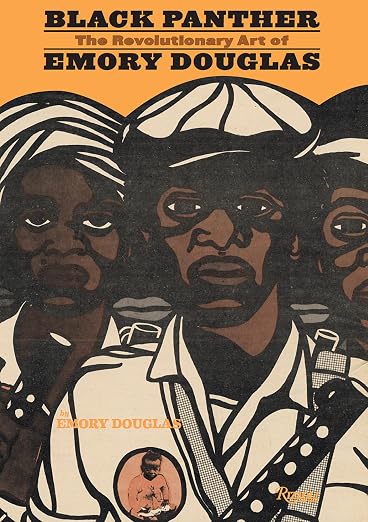
This landmark book documents an important chapter in the history of African American political organization, independent media, and visual communication. It brings together the provocative posters, illustrations, photographs, and groundbreaking graphic work associated with the Black Panther Party for Self-Defense, revealing how art became an instrument for communicating political ideas, documenting social conditions, and encouraging collective awareness. Founded in Oakland, California, in 1966 by Huey P. Newton and Bobby Seale, the Black Panther Party emerged during a period marked by institutionalized racism, police violence, economic inequality, and the continued struggle for civil rights. Following the assassination of Malcolm X in 1965, many African Americans continued searching for effective ways to organize, defend their communities, develop political understanding, and exercise greater control over their social and economic conditions. The establishment of The Black Panther newspaper provided the organization with an independent platform through which to communicate its principles, explain its positions, report community conditions, and distribute its message beyond local boundaries. One of the central figures in this visual development was Emory Douglas, who became the newspaper's art director and the Party's Minister of Culture. Through his distinctive illustrations, photographic compositions, and powerful use of visual symbolism, Douglas helped establish an identity that could communicate complex political realities to people regardless of their educational background. His work demonstrated that graphic design could serve a purpose beyond decoration or commercial promotion. Images could document conditions, challenge accepted narratives, communicate demands, and encourage people to examine the relationship between institutions and everyday life. This book is especially valuable because it does not present the Party's visual identity as the work of one artist alone. It brings together the contributions and recollections of people who participated in developing its cultural and communication strategy. Their perspectives help readers understand the relationship between political organization, independent publishing, artistic expression, and community education. From an RWS perspective, several important lessons emerge: Communication: People can develop independent means of sharing information and explaining their conditions. Education: Visual materials can make historical, political, and social questions more accessible. Organization: A recognizable visual identity can help communicate common objectives and strengthen collective participation. Accountability: Images and publications can document institutional conduct and encourage public examination of power. Self-determination: Communities can develop their own cultural resources rather than depending entirely on institutions that may not represent their interests. For students of Black history, graphic design, journalism, political communication, and community development, this book offers an opportunity to study how visual culture can influence public understanding and historical memory. Its significance is not limited to the period in which the Black Panther Party operated. It also raises practical questions for the present: How can independent media serve communities? How can graphic design communicate facts responsibly? How can education encourage people to identify problems and develop constructive solutions? The lasting lesson is that communication becomes more meaningful when it is connected to knowledge, organization, responsibility, and measurable improvements in people's conditions. For BPMX Liberation Bookstore & Library, this is a valuable historical resource for examining the relationship between African American liberation movements, independent media, cultural development, and the responsible use of art in the pursuit of freedom, justice, and equality.


